
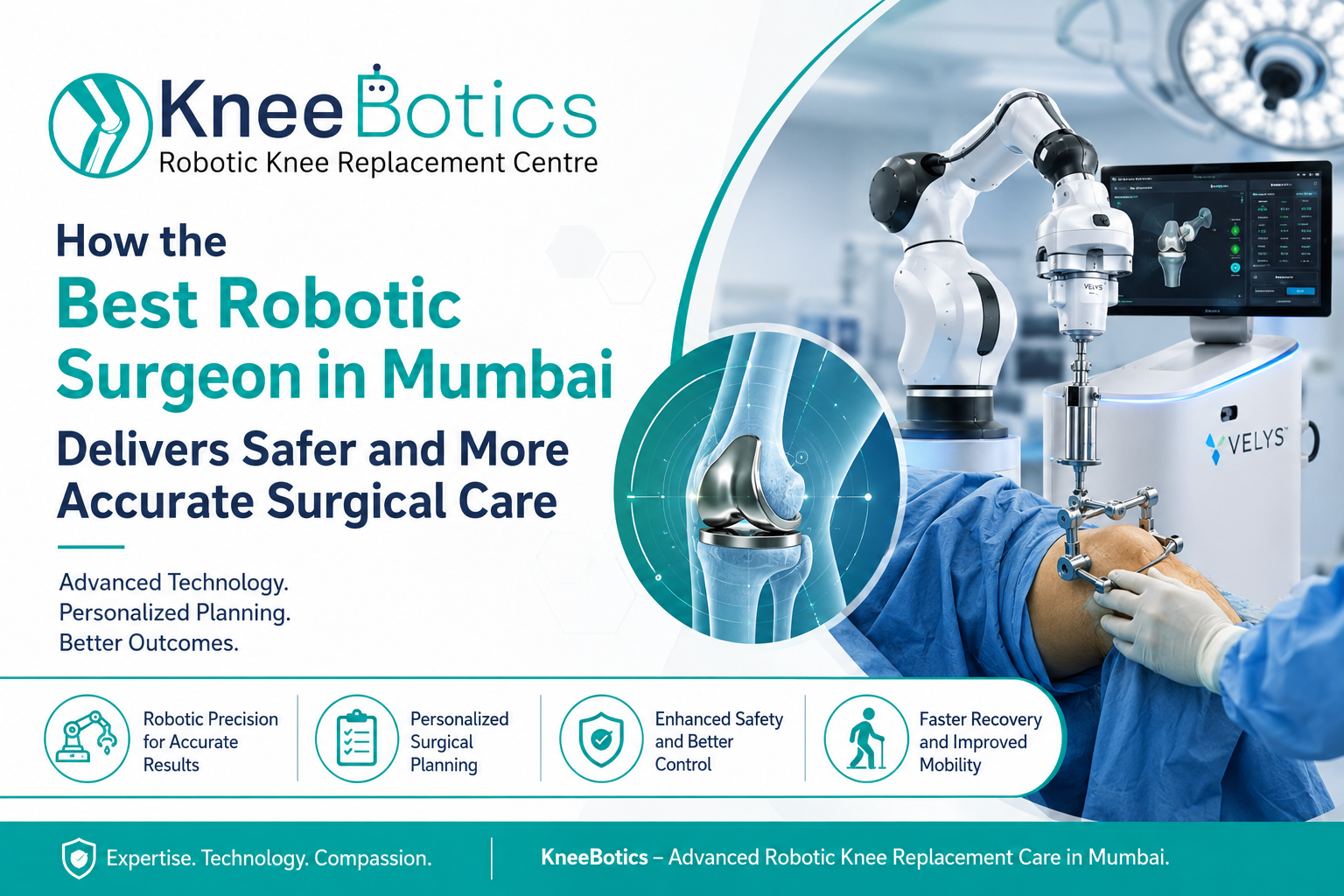
Pain in joints impacts your ability to maintain an active lifestyle, having a negative impact on your daily activities, including climbing the stairs, exercising, traveling, and, most importantly, spending time with your family. Painkillers, physiotherapy, injections and other therapies which do not involve surgery offer only limited relief. Knee replacement surgery may be recommended at some point.
The introduction of robotic surgery in knee replacement surgeries has increased the accuracy and the level of personalization of the surgery. However, the quality of the surgical care cannot be improved with technology alone. The surgeon’s experience, post surgery care, clinical judgment, and surgical planning, and patient selection still play a major role.
When seeking advanced knee replacement surgery, you should consider the best robotic surgeon in Mumbai. This will mean looking beyond a robotic surgery system and understanding the integration of technology and surgical skills.
What Is Robotic-Assisted Knee Replacement?
In robotic assisted knee replacement, a surgical platform guides the surgeon in both surgical planning and execution with the highest level of precision.
The robot never operates on its own. Surgeon control is maintained throughout the procedure. Robotic technology, in addition to surgical instruments, provides the surgeon with a detailed view of the patient’s knee, helps plan surgery, and helps achieve the desired position of the knee implant.
At Kneebotics, Dr. Kunal Patel has adopted the VELYS™ Robotic-Assisted Solution for knee replacement surgery. The system focuses on surgical planning that is customized to the patient’s individual anatomy.
The difference between surgery with robotic assistance and surgery without is that with assistance, the surgeon can translate the meticulously crafted digital surgical instructions into precise movements during the procedure.
Personalized Surgical Planning
Every left knee is different from every right knee. Structures, deformities, and levels of damage can differ among patients.
Robotic technologies let surgeons create a surgical plan on each patient’s anatomy and surgery as opposed to preparing surgery based on a general plan.
This customized plan helps the surgeon determine the best placement of the implant, alignment of the bone and joint, the location and extent of the cuts, and the surgical approach.
Custom surgical plans are a major reason robotic knee replacement in Mumbai is such an individualized procedure.
Increased Surgical Precision
Precise placement of the implant and removal of the damaged bone with proper alignment are critical to a successful knee replacement surgery.
Minor deviations in the placement of the implant or alignment of the bone can change the functionality, comfort, position of the knee joint, and long-term stability of the implant.
Robotic assistance provides a set of digital instructions to the surgeon during the most critical steps of surgery, helping the surgeon execute the instructions with surgical precision.
The goal is not to perform surgery with advanced technology and machines, but rather create a well-balanced and functional joint.
Improved Understanding of Knee Alignment
Alignment is one of the most critical aspects of knee replacement.
The natural anatomy of a patient, pre-existing deformities, and the condition of the surrounding soft tissues dictate placement of the replacement.
With robotic assisted surgery, the surgeon has the option of digitally evaluating the knee before the procedure and adjusting as needed during surgery.
This supports the surgeon’s ability to achieve placement of the implant with more precision.
4. Surgical Experience with System Integration
A robotic system is only one aspect of the treatment process.
The surgeon must still:
- Diagnose the root of the knee issues.
- Decide if knee replacement surgery is necessary
- Choose the correct knee implant.
- Design an individualized surgical plan.
- Deal with unanticipated issues during surgery.
- Control the patient’s recovery and rehabilitation.
Kneebotics is Dr. Kunal Patel’sarea of specialization. He is trained in orthopedics and has additional surgical specialization. He is a consultant orthopedic and joint replacement surgeon.
5. A Balance of Tissue Preservation
The outcome of knee replacement surgery should disrupt surrounding tissues as minimally as possible.
Robotic technology planning allows surgeons to perform implant positioning with precision bone preparation.
This also depends on the patient’s condition and the chosen surgical method. Recovery lengths vary due to many factors, including the patient’s age, health and strength, condition and stage of arthritis, and whether they actually do the rehabilitation.
Remember, the use of robotic surgery does not guarantee a certain recovery time or result.
6. Safety from Multiple Layers of Care
Safety in knee replacement surgery is multi-layered, and robotics are only one component.
A robust care pathway can include:
Effective diagnosis → Personalized planning → Robotic surgery → Observation → Dedicated rehabilitation
The robotic surgery system augments the surgical process with additional information and precision, but the surgeon retains complete control of the clinical process.
Patients should understand that surgery, regardless of the use of robotic technology, entails potential complications. There are many risk factors, and a detailed assessment is vital to evaluate a patient’s health status and determine if surgery is appropriate.
Who Qualifies For Robotic Knee Replacement?
Robotic knee replacement can be an appropriate option for the following knee problems:
- Severe joint problems due to arthritis
- Pain that doesn’t subside
- Significant knee stiffness
- Difficulty to walk or climb stairs
- Knee deformity
- Immobility despite non-surgical care
- Extreme joint degeneration
Not every patient is a candidate for robotic surgery. An orthopedic assessment is necessary to determine your eligibility.
A specialist will consider your symptoms, history, and imaging reports in addition to your activity level and goals to advise you on the least invasive option.
Why Kneebotics for Robotic Knee Replacement in Mumbai?
Kneebotics brings together specialized orthopaedic practices with the best of positive disruption that robotic surgical technology brings to the table.
Their patient-first approach incorporates special emphasis on the planning and delivery of personalized surgery, pre and post-operative education, and care. The Kneebotics’ website mentions Dr. Kunal Patel as a consultant for orthopaedics and joint replacement surgery and a specialist in robotic knee replacements.
The VELYS™ Robotic-Assisted Solution is used in combination with a custom surgery planning software integral to patient-centered surgical approach based on individual anatomy.
What Should You Ask Before Choosing a Robotic Knee Surgeon?
When deciding on a surgeon, be sure to ask your specialist these questions:
- Do you think I am a candidate for robotic-assisted knee replacement?
- Which robotic systems are available to you?
- How much experience with robotic knee replacement does the surgeon have?
- Which type of knee replacement is appropriate for me?
- How will my individualized surgical plan be developed?
- What are the possible complications?
- What will the recovery process be like?
- What type of therapy and what follow up care will I be responsible for?
- What implant are you recommending and why?
- What should I expect in terms of results?
If you want a specific surgery, you should explore the available options rather than choosing a doctor simply due to the word “robotic” being associated with them.
The Future of Knee Replacement Is Personalized
Robotic orthopedic surgery is a new type of surgery that personalizes knee replacement surgery with the help of digital planning and surgery execution in one complete process.
Personalization and technology go hand in hand for the best results.
If you are looking for robotic knee replacement in Mumbai, reach out to a specialist to see if you qualify. Kneebotics is Dharavi’s first choice when it comes to knee replacement care. They take great pride in their quality of care, which is all led by Dr. Kunal Patel. They also emphasize patient care in order to develop more personalized technology.
Frequently Asked Questions
How do robotic knee replacements compare to conventional knee replacements in terms of safety?
While using robotic technology adds layers of safety and planning to the surgical process, no surgical intervention is 100% safe. Facets of safety across all types of surgery rely on the skill of the surgical team, the surroundings within which the surgery is performed, and the post-operative care.
Will the robot do the knee replacement surgery?
Robotic technology is used as a planning tool for the surgical process, and as always, the surgeon remains fully in control.
Would a robotic knee replacement be suitable for everyone?
No. There are many factors associated with a patient’s health and history that impact whether robotic replacement surgery is safe and appropriate, including the reason for surgery, severity of arthritis, existing anatomy, co-morbidities, general health, previous surgery, and other clinical factors. An orthopaedic assessment is necessary.
How precise is a robotic knee replacement?
Robotic systems use advanced technology to help surgeons gain a lot of digital precision prior to surgery and a lot of intraoperative precision. However, the final outcome of the surgery is highly dependent on the surgeon’s experience and clinical judgment.
What is the expected recovery time to when I can walk after robotic knee replacement surgery?
Recovery times are highly variable and depend on many factors for each individual. After surgery, some people begin to mobilize, but how quickly recovery progresses depends on the person’s health, surgery, and the development of supporting treatments.
Is physiotherapy still required after robotic knee replacement?
Yes! After knee replacement surgery, physiotherapy is necessary to help repattern movements and develop strength, flexibility, and confidence.
How do I choose the best robotic surgeon in Mumbai?
Take into account the surgeon’s orthopaedic qualifications, experience with robotic surgery, surgical volume, available hospital amenities, the experience with custom preoperative planning, the selection of implants, communication with the patient, and the postoperative rehabilitation support. A consultation is the only way to determine if the surgeon is right for you.
NAP – Kneebotics
Business Name: Kneebotics – Robotic Joint Replacement Center
Address: Plot No. 3, S V Road, Punit Nagar, Borivali West, Mumbai, Maharashtra 400092
Phone: +91 93727 37914
Email: drkunalpatel@gmail.com
The address and appointment details are listed on the official Kneebotics contact page.
Follow Kneebotics on Social Media
- Facebook: https://www.facebook.com/KneeBotics
- Instagram: https://www.instagram.com/kneebotics/
Take the Next Step Toward Better Knee Care
Persistent knee pain should not be allowed to define your lifestyle. If you have been advised to consider knee replacement, advanced robotic-assisted surgery may offer a highly personalized approach.
Speak with an experienced orthopaedic specialist to understand your options and find out if robotic knee replacement in Mumbai is right for you.
