
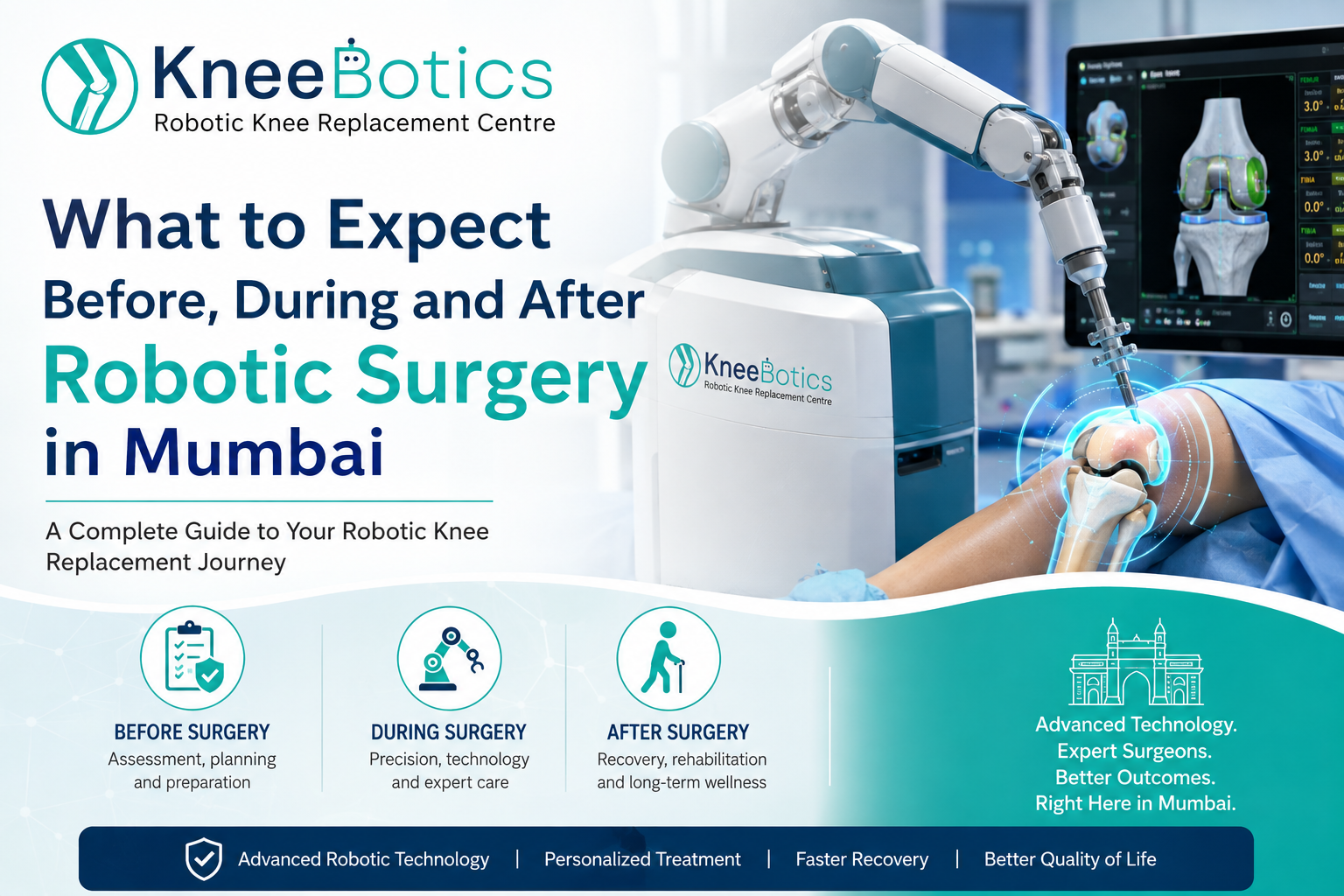
Robotic-assisted orthopedic procedures have transformed the way knee replacement surgeries are performed, offering greater precision, improved alignment, and a more personalized treatment approach. If you’ve been advised to undergo robotic surgery in Mumbai, it’s natural to have questions about what the entire process involves—from your initial consultation to recovery.
Understanding each stage of the journey can help reduce anxiety and prepare you for a smoother surgical experience. In this guide, we’ll walk you through what to expect before, during, and after robotic-assisted knee surgery, so you can make informed decisions about your treatment.
What Is Robotic-Assisted Knee Surgery?
Technology has revolutionized many aspects of surgery and knee replacements are no exception. Combining the latest surgical technologies, images and data control, and advanced robotics has allowed surgeons to maximize the results of a knee replacement surgery. Although many believe that robots perform knee replacements on their own, that is not the case. More appropriately, the rapid response computer technology allows the surgeon to perform an extremely precise and planned surgery.
A total knee replacement and a Robotic partial knee replacement in Mumbai with the use of advanced technology allows the surgeon to preserve as much unhealthy bone and tissue as possible and creates the optimal placement of the knee joint prosthesis.
Before Robotic-Assisted Knee Surgery
A successful outcome of a surgery requires meticulous preparation by the patient and care-giver.
- Comprehensive Medical Evaluation
Your orthopedic surgeon will perform the following evaluations to assess your condition:
- Physical exam
- X-ray
- CT scan (if necessary for robotic planning)
- Review of medical records
- Blood work
- Cardiac assessment, if necessary
Assessments will help us determine the most appropriate course of treatment for you and whether robotic-assisted knee replacement surgery is the right intervention for your case.
- Personalized Surgical Planning
One of the key advantages of robotic knee replacement is the level of detail that can go into preoperative planning.
Through the use of advanced imaging, the surgical team can create a virtual model of your knee to assist in:
- Deciding the appropriate size of implants
- Placing implants in the most optimal position
- Preserving the most bone with the least removal
- Achieving optimal alignment of the joint
- Balancing the soft tissues of the joint
The intent of this detailed surgical planning is to improve knee function and increase the longevity of implant.
- Lifestyle Preparation
Prior to surgery, you may be advised to:
- Do strengthening exercises
- Improve your diet
- Quit smoking
- Control diabetes and sugar levels
- Review and reduce medicines
- Pre-plan for departure care to be available for the first several weeks of recovery
Investing time to prepare for a healthy recovery after surgery pays off when you have a smoother recovery.
What to Expect When You Undergo Robotic Surgery?
The day of your surgery will start with an admission to the hospital and preparations by our team.
Anesthesia
Most knee replacements performed using the robotic technology will use spinal anesthesia with light sedation. Depending on your health conditions, it may be recommended that you have general anesthesia.
Surgical Procedure
- Access the damaged knee joint.
- Insert the robotic-planned guides/cutters.
- The system generates real time models of your knee for the surgeon to reference.
- Robotic tools remove damaged bone precisely to the millimeter.
- Artificial implants are inserted precisely to the millimeter.
- The surgeon checks the joint allows for adequate movement.
Surgeons remain fully in control throughout the operation. The system helps improve accuracy by giving the surgeon real time feedback.
Duration of Surgery
Surgery duration is typically between one to two hours and may be longer for complicated surgeries and total knee replacements.
After Surgery: Recovery and Rehabilitation
The recovery process starts as soon as surgery begins.
Immediate Postoperative Care
Following the surgery, patients spend a limited time in a postoperative recovery area. During this time, medical staff ensures:
- Pain is managed
- Blood flow is adequate
- Wound is clean
- Early movement is facilitated
- Vitals are monitored
Many patients stand and walk with assistance within 24 hours post surgery.
Hospital Stay
Time spent in a hospital or other care facility is individualized based on recovery time.
Conducting a knee replacement surgery in a minimally invasive manner using a robot provides:
- Decreased blood loss
- Minimized surgical trauma
- Less pain following surgery and increased movement
- Speedier recovery and hospital discharge
Your orthopedic surgeon will decide when you are healthy enough to be discharged.
Physiotherapy: A Critical Part of Recovery
Recovery and rehabilitation are equally important to surgery.
A comprehensive physiotherapy program aims to:
- return knee range of motion
- increase muscle strength
- increase flexibility
- enhance balance
- regain walking ability
Most patients are able to return to everyday activities in the weeks to follow. This is under the close supervision of their rehabilitation therapist.
Returning to Everyday Activities
Recovery is different for each person. This is due to age, existing fitness, other health issues you may have, and the type of knee replacement surgery you had.
In general, one can expect that:
- Supported walking may happen in 1-2 days.
- Independence is gained the following weeks.
- Driving may be permitted once you have been cleared.
- Resumption of low impact activities is recommended by your surgeon.
During your recovery you will receive specialized guidance by your health care team.
Benefits of Robotic-Assisted Knee Replacement
There are general advantages of robotic-assisted knee replacement surgery that make it a popular choice for patients.
- Improved joint alignment
- Precise implant alignment
- Minimized damage to soft tissue
- An improved functioning knee
- Improved implant longevity
- Healthy bone and tissue are preserved
While the benefits are broad and patients have very different experiences, robotic-assisted knee replacement is very popular.
Is Robotic Partial Knee Replacement Right for You?
Not everyone requires a total knee replacement. If your knee only has arthritis in one section, a Robotic partial knee replacement in Mumbai may be the better choice for you.
Shorter incisions, less loss of bone stock, more natural motion, quicker healing, and less pain are all possible with partial knee replacements. Your orthopedic surgeon will decide if you qualify clinically and with imaging studies.
Selecting the Best Surgeon for Mumbai Robotic Knee Surgery
Opinions differ on whether the successful completion a robotic surgery is a result of the technology employed or the skill of the operator.
You must evaluate:
- How many knee replacement surgeries has the surgeon performed?
- Has the surgeon performed robotic assisted surgery?
- Is the hospital equipped to handle your surgery?
- Positive comments on the surgery?
Technology can help, but the surgeon’s ability to adjust to a patient’s unique health profile is what makes the best difference.
Closing Remarks
Being an informed patient is vital for the successful outcome of any orthopedic surgery. This is especially true for surgery involving the latest advances in robot assisted partial knee replacement surgery in Mumbai.
Whether you are seeking a full knee replacement in Mumbai or a Robotic partial knee replacement in Mumbai, the same rules apply for a positive recovery. An experienced orthopedic team, adherence to a rehabilitation plan post surgery, and practical recovery goals will help ensure a best possible outcome to your surgery.
If you have pain in your knee that interferes with your daily living, then it is time to consult a specialized orthopedic surgeon to see if you are a candidate for a robotic assisted knee replacement.
FAQs
- Is robotic knee surgery completely done by a robot?
No. An orthopedic surgeon performs the surgery. The robot provides real-time directions and helps with the surgery, but the doctor is in complete control the whole time.
- Is robotic-assisted knee replacement less painful?
Even though the level of pain varies, most patients say they experience less pain and less soft tissue damage when compared to conventional methods, and they also report an improvement in early healing.
- What is the average recovery time after robotic knee surgery?
Most people walk within one or two days after surgery and the rest is controlled by their health, rehab, and compliance to physical therapy.
- Who is a candidate for robotic partial knee replacement?
Those people who only have knee arthritis in one of the three compartments are good candidates. An extensive orthopedic assessment is necessary for these people.
- Why do more patients in Mumbai opt for robotic surgery?
Robotic assisted techniques use advanced technologies with specialized surgical planning and the latest orthopedic implants, which encourages patients to opt for this technology.
NAP
Phone Number
+91-9372737914
Office Address
Plot No 3, S V Road, Punit Nagar,, Borivali West, Mumbai, Maharashtra 400092
Office Email
drkunalpatel@gmail.com
Social Links
https://www.facebook.com/KneeBotics
https://www.instagram.com/kneebotics/
