
Why Choose Robotic Knee Replacement? Insights from Mumbai’s Leading Surgeons
Persistent knee pain can dramatically change the way you live your life. Eventually activities such as walking, climbing stairs, getting up from a chair and standing for long periods can become difficult. While knee arthritis and severe joint damage may be treated with conservative methods such as medications, Physio therapy and lifestyle modifications, surgery may become inevitable. The field of orthopaedics has improved and so has the technology. Robotic surgery has improved knee care. Robotic knee replacement in Mumbai has orthopaedic surgeons who, along with their years of experience, plan surgeries using Robotic and computer technologies. This helps them improve accuracy during selected knee replacements. You may have many questions about robotic assistance. Is it better than conventional knee replacement? Is it right for you? Before making a final decision, there are a few things you should know. Things To Know Before Opting For Robotic Knee Replacement Robotic assistance does not mean a robot performs surgery. The surgeon is always in control. Robotic technology is a powerful tool to help perform surgeries. Based on the system in use, it may provide the surgeon with real time information during the surgery to help with aspects such as bone preparation and implant positioning. The overall goal is to keep the surgery as controlled and as personalized as possible. Before making your final decision, you should do your own research and find out what else is out there. The amount of arthritis, the shape of your bones, the condition of your ligaments, the alignment of your limbs and the overall health of your joints can vary a lot from person to person. As knee replacement surgery is increasingly being guided by robotic technology, surgeons can expect to have additional information when planning and performing surgery. Some benefits may include: 1. More Individualized Surgical Planning Knee replacement surgery, typically, relies on averages and standards, and may not always account for the individual variances that are present in each patient’s anatomy. Robotic technology aids in the creation of a more individualized treatment plan. This may allow surgeons to better assess the positioning and alignment of components during surgery. 2. More Accurate Bone Preparation In a similar manner, the technology may assist in the achievement of the planned cuts to the bone to better reflect the individual’s anatomy, especially if precise positioning is essential for a well-balanced knee. 3. More Accurate Implant Positioning The function of a knee replacement is dependant on the alignment and position of the implant. With this technology, the surgeon has the option of receiving more information to assist in reaching the desired position of the implant. 4. Preservation of Healthy Bone and Tissue In selected cases, the technology can aid in achieving a more controlled and individualized bone preparation. This is especially applicable in a partial knee replacement where healthy bone may be preserved. Support for More Individualized Approach A key difference with robotic-assisted knee surgery is that every surgical plan is customized based on the anatomy and joint condition of the patient. Because of this, robotic systems have transformed the way various joint replacements are performed. Total versus Partial Knee Replacement The other major factor to consider is whether a patient requires a total or partial knee replacement. Total Knee Replacement Total knee replacement is indicated if arthritis or other joint damage is present in more than one area of the knee joint. During surgery, damaged areas of the knee joint are replaced with an artificial joint. The knee joint is then lined with a plastic spacer. Using a robotic system can aid the surgeon in planning the surgery, prepping the bone and positioning the implants. Partial Knee Replacement Partial knee replacement may be considered when arthritis is present in only a single area of the knee joint and the other areas of the joint can be retained. The goal of the surgery is to replace only the damaged portion of the knee joint. The healthy bone and joint structures can be preserved. This may result in a smaller and less invasive surgery with potentially better and quicker rehabilitation. However, this may not always be the case and there are several factors that must be considered prior to surgery. Who May Be a Candidate for Robotic Knee Replacement? Robotic assistance may not always be the best choice for every patient. Your surgeon may consider it if you have: Advanced knee osteoarthritis Persistent knee pain that limits your daily activities Knee stiffness and/or limited range of motion Knee deformity and/or malalignment Joint damage that has not improved with non-surgical treatment A medical condition for which knee replacement is recommended For Robotic partial knee replacement in Mumbai, specific criteria are considered. Usually, arthritis needs to be confined to a specific knee compartment and the other structures and ligaments of the knee joint need to be normal and healthy enough to preserve. A thorough physical examination and appropriate diagnostic tests are done to determine the type of surgery to be performed. Is Robotic Knee Replacement Better Than Conventional Surgery? This is one of the most frequent questions that patients have. Better results do not always depend on the use of advanced technology in surgery. Success of knee replacement mainly depends on: The surgeon’s correct assessment of the problem The surgeon’s experience and skills Judgment in deciding about the right patient for the surgery Selection of appropriate implant Correct surgical technique General health of the patient Intensity of physiotherapy and rehabilitation Adherence to post-operative instructions For some patients, a traditional (conventional) knee replacement may be more appropriate. A good, experienced surgeon will make the decision based on the patient condition and not on the technology because of its recent advancement. What Can Patients Expect During Their Procedure? Although the exact process varies with different robotic platforms and types of replacement, the overall process generally consists of the following steps. Step 1: Detailed Evaluation During this step, the surgeon reviews the patients symptoms and history as well as performs a physical examination and reviews
What You Should Know About Robotic-Assisted Knee Replacement Surgery in Mumbai

Joint discomfort can make everyday tasks around the house and at work difficult. This can include simple tasks like going for a walk or a jog, going up the stairs, and even getting out of the chair. If conservative treatments of your knee joint do not work, you may need to consider a knee replacement surgery. Thankfully, innovations in technology can help patients even further. With robotic knee replacement surgery, a patient may benefit from the aid of a surgeon in combination with a robotic system. This type of surgery is a precision guided system that helps your doctor address the joint replacement surgery. If you are considering robotic knee replacement in Mumbai, understanding how the surgery works, prepping for the surgery, potential benefits of the surgery, and expected recovery time may help you formulate questions to ask your doctor. What Happens during Robotic-Assisted Knee Replacement Surgery? Robotic-assisted systems help a surgeon in surgery planning and provide a surgeon with information during the surgery. This system, however, does not perform the surgery. The surgeon is in complete control of the surgery at all times. For whom is Knee Replacement Surgery? Knee replacement surgery is performed when there is significant damage to the knee joint. This damage may be caused by a number of reasons including, but not limited to, a serious injury to the joint, rheumatoid arthritis, osteoarthritis, or other conditions which result in a significant loss of cartilage in the joint. A referring physician may request a surgical evaluation when conservative management is inadequate to alleviate a patient’s symptoms. The orthopedic surgeon will review the patient’s symptoms and the results of previous imaging, in addition to the patient’s history, physical exam, and overall functional status. The orthopedic surgeon may perform or order additional diagnostic studies. If therapy is prescribed, it may be physical therapy, occupational therapy,speech therapy or a combination. Medications may be prescribed or changed. Diet, fitness level and weight may be a factor in surgery as well as activity level. Surgery may be recommended to alter a deformity, gait, improve an impaired function or a malalignment. Other factors may be pain, weakness, instability, stiffness or a limitation in range of motion. The expected benefits of a surgical procedure need to outweigh the potential risks of a surgical procedure. Decision Making Before Robotic Knee Replacement A number of other factors need to be taken into account prior to scheduling a knee replacement surgery. During your appointment with the surgeon, find out why the surgeon thinks surgery is the best option for you. In addition, ask about potential risks, benefits and other options. Make a list of questions to bring with you to the appointment. It is important to also consider the expected duration of your recovery. The duration of your recovery will be largely dependent on the therapy you receive and your compliance with the therapy. It is important to choose a best robotic surgeon in Mumbai with the necessary expertise and experience with the type of procedure you are having. In addition, you should choose a hospital with a competent, caring staff. The hospital should have state of the art equipment and be well equipped to assist you following your surgery. Understanding Recovery Recovery times vary case by case following a knee replacement surgery. Generally speaking, it is encouraged for patients to begin rehabilitation and initiate movement post surgery. Physical therapy may help restore and build flexibility, balance, and strength of your knee joint. Following your surgeon’s post surgery recovery plan, attending your follow up appointments, completing your course of prescription, and slowly but surely increasing your movement and activity helps aid in the recovery process. Pushing your recovery too quickly can be a detriment to the process. Make sure you speak up to your healthcare team should you experience any unusual symptoms. Make an Informed Decision Robotic knee replacement is an advanced technology that can benefit some patients, but it is not always the best option. Each case is assessed on an individual basis. If you live in Mumbai and are considering this type of surgery, it is best to seek the opinion of an experienced orthopedic surgeon to learn about your options and evaluate the pros and cons of the surgery. The right surgeon will help you better understand what to expect and put your mind at ease regarding your surgery. NAP – Kneebotics Business Name: Kneebotics – Robotic Joint Replacement Center Address: Plot No. 3, S V Road, Punit Nagar, Borivali West, Mumbai, Maharashtra 400092 Phone: +91 93727 37914 Email: drkunalpatel@gmail.com The address and appointment details are listed on the official Kneebotics contact page. Follow Kneebotics on Social Media Facebook: https://www.facebook.com/KneeBotics Instagram: https://www.instagram.com/kneebotics/ If you are searching for the Best orthopedic doctor in tricity, then click here
How the Best Robotic Surgeon in Mumbai Delivers Safer and More Accurate Surgical Care
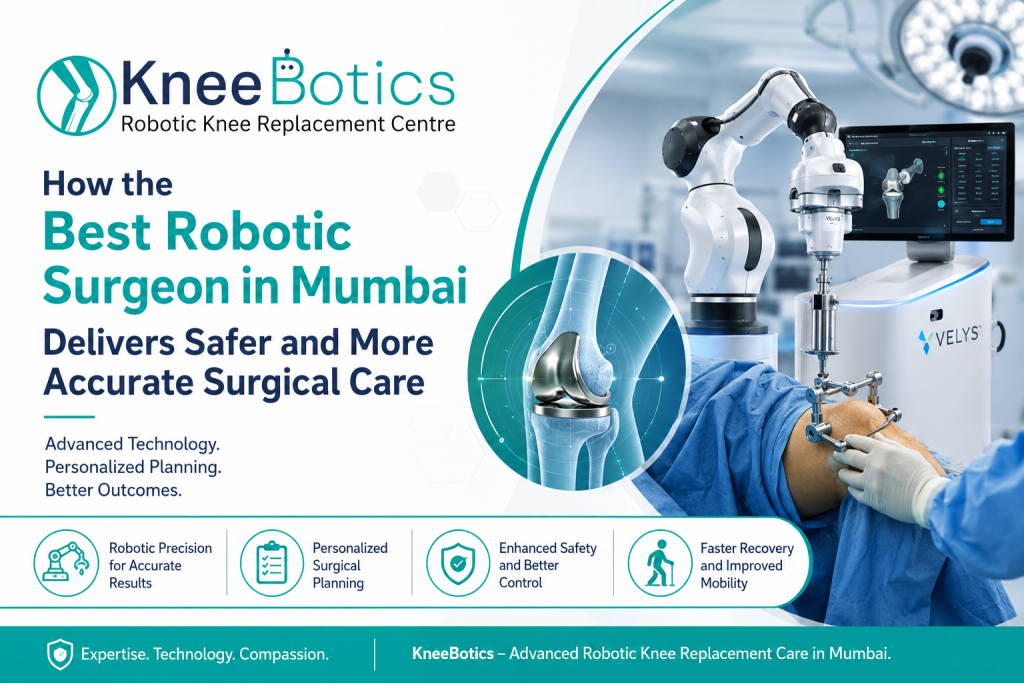
Pain in joints impacts your ability to maintain an active lifestyle, having a negative impact on your daily activities, including climbing the stairs, exercising, traveling, and, most importantly, spending time with your family. Painkillers, physiotherapy, injections and other therapies which do not involve surgery offer only limited relief. Knee replacement surgery may be recommended at some point. The introduction of robotic surgery in knee replacement surgeries has increased the accuracy and the level of personalization of the surgery. However, the quality of the surgical care cannot be improved with technology alone. The surgeon’s experience, post surgery care, clinical judgment, and surgical planning, and patient selection still play a major role. When seeking advanced knee replacement surgery, you should consider the best robotic surgeon in Mumbai. This will mean looking beyond a robotic surgery system and understanding the integration of technology and surgical skills. What Is Robotic-Assisted Knee Replacement? In robotic assisted knee replacement, a surgical platform guides the surgeon in both surgical planning and execution with the highest level of precision. The robot never operates on its own. Surgeon control is maintained throughout the procedure. Robotic technology, in addition to surgical instruments, provides the surgeon with a detailed view of the patient’s knee, helps plan surgery, and helps achieve the desired position of the knee implant. At Kneebotics, Dr. Kunal Patel has adopted the VELYS™ Robotic-Assisted Solution for knee replacement surgery. The system focuses on surgical planning that is customized to the patient’s individual anatomy. The difference between surgery with robotic assistance and surgery without is that with assistance, the surgeon can translate the meticulously crafted digital surgical instructions into precise movements during the procedure. Personalized Surgical Planning Every left knee is different from every right knee. Structures, deformities, and levels of damage can differ among patients. Robotic technologies let surgeons create a surgical plan on each patient’s anatomy and surgery as opposed to preparing surgery based on a general plan. This customized plan helps the surgeon determine the best placement of the implant, alignment of the bone and joint, the location and extent of the cuts, and the surgical approach. Custom surgical plans are a major reason robotic knee replacement in Mumbai is such an individualized procedure. Increased Surgical Precision Precise placement of the implant and removal of the damaged bone with proper alignment are critical to a successful knee replacement surgery. Minor deviations in the placement of the implant or alignment of the bone can change the functionality, comfort, position of the knee joint, and long-term stability of the implant. Robotic assistance provides a set of digital instructions to the surgeon during the most critical steps of surgery, helping the surgeon execute the instructions with surgical precision. The goal is not to perform surgery with advanced technology and machines, but rather create a well-balanced and functional joint. Improved Understanding of Knee Alignment Alignment is one of the most critical aspects of knee replacement. The natural anatomy of a patient, pre-existing deformities, and the condition of the surrounding soft tissues dictate placement of the replacement. With robotic assisted surgery, the surgeon has the option of digitally evaluating the knee before the procedure and adjusting as needed during surgery. This supports the surgeon’s ability to achieve placement of the implant with more precision. 4. Surgical Experience with System Integration A robotic system is only one aspect of the treatment process. The surgeon must still: Diagnose the root of the knee issues. Decide if knee replacement surgery is necessary Choose the correct knee implant. Design an individualized surgical plan. Deal with unanticipated issues during surgery. Control the patient’s recovery and rehabilitation. Kneebotics is Dr. Kunal Patel’sarea of specialization. He is trained in orthopedics and has additional surgical specialization. He is a consultant orthopedic and joint replacement surgeon. 5. A Balance of Tissue Preservation The outcome of knee replacement surgery should disrupt surrounding tissues as minimally as possible. Robotic technology planning allows surgeons to perform implant positioning with precision bone preparation. This also depends on the patient’s condition and the chosen surgical method. Recovery lengths vary due to many factors, including the patient’s age, health and strength, condition and stage of arthritis, and whether they actually do the rehabilitation. Remember, the use of robotic surgery does not guarantee a certain recovery time or result. 6. Safety from Multiple Layers of Care Safety in knee replacement surgery is multi-layered, and robotics are only one component. A robust care pathway can include: Effective diagnosis → Personalized planning → Robotic surgery → Observation → Dedicated rehabilitation The robotic surgery system augments the surgical process with additional information and precision, but the surgeon retains complete control of the clinical process. Patients should understand that surgery, regardless of the use of robotic technology, entails potential complications. There are many risk factors, and a detailed assessment is vital to evaluate a patient’s health status and determine if surgery is appropriate. Who Qualifies For Robotic Knee Replacement? Robotic knee replacement can be an appropriate option for the following knee problems: Severe joint problems due to arthritis Pain that doesn’t subside Significant knee stiffness Difficulty to walk or climb stairs Knee deformity Immobility despite non-surgical care Extreme joint degeneration Not every patient is a candidate for robotic surgery. An orthopedic assessment is necessary to determine your eligibility. A specialist will consider your symptoms, history, and imaging reports in addition to your activity level and goals to advise you on the least invasive option. Why Kneebotics for Robotic Knee Replacement in Mumbai? Kneebotics brings together specialized orthopaedic practices with the best of positive disruption that robotic surgical technology brings to the table. Their patient-first approach incorporates special emphasis on the planning and delivery of personalized surgery, pre and post-operative education, and care. The Kneebotics’ website mentions Dr. Kunal Patel as a consultant for orthopaedics and joint replacement surgery and a specialist in robotic knee replacements. The VELYS™ Robotic-Assisted Solution is used in combination with a custom surgery planning software integral to patient-centered surgical approach based on individual anatomy. What Should You Ask
Robotic Knee Replacement Surgery in Mumbai for Better Alignment & Long-Lasting Results

Chronic pain in your knees alters every aspect of your life. Even walking or climbing stairs may cause agony, keeping you from enjoying your favorite activities. When other methods for care and pain management no longer work, you may need a knee replacement. Initially, you may be concerned about the invasiveness and risks of joint replacement surgery. However, advancements in the field of orthopedics and robotic knee replacement in Mumbai procedures have made this process simpler and less risky. Patients in Mumbai can turn to Kneebotics for the most advanced robotic-assisted knee replacements designed to optimize precision, alignment, and outcomes that last. What Is Robotic Knee Replacement Surgery? Robotic knee replacement is an advanced surgical method where technology assists the orthopedic surgeon robotic knee replacement in joint replacement. The robotic system builds a bespoke surgical plan to account for unique patient anatomy. Using this system allows the surgeon to: Achieve more accurate implant positioning Improve joint alignment Maintain balance in soft tissues Minimize surgical errors Achieve greater range of motion post-operative With the aid of this technology, knee replacements become more of a bespoke and precise approach when compared to traditional methods. Why Alignment Matters in Knee Replacement Alignment is a critical component in the success of a knee replacement. Even the most minute alterations of alignment may result in: Lack of comfort when walking Reduced stability of the joint Decreased speed of recovery Reduced lifespan of the joint implant Using the robotic system allows the surgeon to achieve greater precision, thereby helping the joint to function more naturally. Benefits of Robotic Knee Replacement Greater Precision Robotic systems assist with exact bone preparation and implant placement. Personalized Treatment Each knee is different. Robotic planning creates a unique approach for each patient. Faster Recovery Reduced damage to surrounding tissues may allow patients to recover faster. Improved Mobility Many patients experience enhanced movement and flexibility. Long-Lasting Results Better alignment may lead to lower wear on implants over time. Who Can Benefit from Robotic Knee Replacement? You might be eligible for this treatment option if you have: Severe knee arthritis Relentless knee pain Difficulty ambulating or ascension of stairs Knee stiffness Deformities of the knees Inadequate pain relief from non-operative methods A comprehensive orthopedic assessment will be needed to help formulate the best approach. Why Choose Kneebotics in Mumbai? Kneebotics has specialized robotic joint replacement through dedicated client service. Under the supervision of Dr. Kunal Patel, you receive: Advanced robotic surgical planning Tailored treatment approach State-of-the-art surgical suites All-inclusive rehabilitation services Long-term joint health counseling Recovery After Robotic Knee Replacement The recovery process will vary for all patients depending on age, mobility, and overall health. However, the majority have: Standing or ambulation with help, within 24–48 hours Enhanced mobility to perform activities of daily living within weeks Increased muscular strength and flexibility in the ensuing time Follow-up routine physiotherapy will be instrumental during the recovery period. Frequently Asked Questions Is robotic knee replacement safe? Yes, robotic knee replacement is safe and highly efficacious in the hands of an experienced orthopedic surgeon. How long does the surgery take? Most procedures take about 1-2 hours, depending on the surgery case. How soon can I walk after surgery? Most patients are able to ambulate with help within the first 1-2 days post-surgery. Is robotic surgery better than traditional knee replacement? With robotic surgery, your knee replacement surgery can be more precise and improved alignment with more tailored personalization. How long does a knee implant last? With most alignments and care taken in knee implants, you can rely on them for many years. NAP Details Kneebotics – Robotic Joint Replacement Center Address: Mumbai, Maharashtra, India Phone: +91-9372737914 Email: info@kneebotics.com Website: www.kneebotics.com Social Media Links Facebook: https://facebook.com/kneebotics Instagram: https://instagram.com/kneebotics YouTube: https://youtube.com/kneebotics twitter: https://x.com/drkunalpatel If you are looking for Robotic total knee replacement in Mumbai, Kneebotics offers patients a revolutionary way to regain their movement, confidence, and comprehensive quality of life.
Why Choose Robotic Total Knee Replacement in Mumbai for Precision Surgery?

Injury, arthritis or slow degeneration of joints with age can lead to knee pain that impacts daily life, hindering mobility and independence. Robotic Total Knee Replacement in Mumbai is a newer, more precise, and patient-centric advancement in orthopedic surgery that has evolved from the traditional knee replacement operation, which has always been an ideal treatment. Surgical procedure in Mumbai: robotic-assisted knee replacement surgery Understanding Robotic Total Knee Replacement How Specific is Robotic Total Knee Replacement?Robotic total knee replacement happens with a high level of precision, as the orthopedic surgeon relies on robotic technology to plan and conduct the procedure. The robotic system does not substitute the surgeon robotic knee replacement surgeon; rather, it augments the surgeon’s precision with real-world data and computer-aided guidance. Before surgery, detailed imaging scans form a 3D model of the patient’s knee joint. That way surgeons can plan where to place an implant tailored to the patient’s specific anatomy, which leads to personalized treatment. Why Does Knee Replacement Surgery Need to Be Precise? Knee replacement, proper implant alignment/ balance of joints. Even small errors can create discomfort or limited mobility, and put the implant at risk of premature wear and tear. Robotic assistance enables: Accurate bone preparation Precise implant positioning Better ligament balancing Preservation of healthy tissues Such accuracy aids joint functionality and augments patient gratification post-operatively. The post Key Benefits of Robotic Total Knee Replacement appeared first on BioXcellerator. High Surgical Accuracy Robotic technology assists surgeons in executing movements with millimeter precision. Thereby ensuring the stability and effective outcome of joint replacement surgeries. Personalized Surgical Planning Every patient’s biomechanical structure of the knee is unique. Robotic systems permit personalized procedures according to individual anatomy, resulting in more natural flexion–extension of the knee post surgically. Minimally Invasive Approach Robotic-assisted procedures make smaller, more precise incisions, limiting surrounding muscle operated by the procedure. Benefits include: Less blood loss Reduced post-operative pain Lower risk of complications Faster Recovery and Rehabilitation As surrounding tissue is preserved, patients usually heal quickly and can start walking sooner than with conventional surgery. Improved Implant Longevity Accurate alignment prevents uneven wear on implants, contributing to the longevity of artificial joints and reducing the risk for revision surgery. Enhanced Safety During Surgery The robotic system gives real-time feedback to surgeons, enabling them to make on-the-fly adjustments to the movement of tools and other variables during operations. This helps enhance overall surgical safety as well. Mumbai: The Best Place for Robotic Knee Replacement? As one of India’s top-rated cities in technology and health care, Mumbai offers sophisticated orthopedic treatment catered to by skilled experts. Patients benefit from: The cutting-edge robotic surgical systems Highly skilled joint replacement surgeons Modern hospital infrastructure Comprehensive physiotherapy and rehabilitation programs Advanced Knee Care at Kneebotics Kneebotics is all about driving precision with robotic-assisted orthopedic solutions for knee replacement surgery. The approach emphasizes: Detailed pre-surgical assessment Customized surgical planning Accurate robotic guidance Faster recovery protocols Together they provide patients with a safe way to regain mobility as soon as possible which dramatically improves overall surgical outcomes. Here is How Robotic Total knee Replacement Helpful? You might be an ideal candidate if you have: Severe osteoarthritis or rheumatoid arthritis Chronic knee pain impacting daily living Stiffness and reduced mobility Even if medications or physiotherapy provide us with no effective results Trouble walking, climbing stairs or standing for a long time A consultation with a joint replacement specialist can help you come to the best treatment option. Life After Robotic Knee Replacement Most patients experience drastic improvements following recovery, such as: Less or no knee pain Improved flexibility and movement Better walking ability Enhanced quality of life In more detail, after proper physiotherapy and lifestyle care patients can regain their routine with much confidence. Conclusion Robotic Total Knee Replacement is a great evolution in orthopedic surgery. Integrating surgical distinction and smart technology, it provides unparalleled accuracy, tailored treatment, and better recovery results. Robotic knee replacement in Mumbai – with our world-class facility at Kneebotics, no one is more equipped to handle your needs; head over today! Frequently Asked Questions (FAQs) How is robotic knee replacement different from traditional surgery? Robotic knee replacement employs computer-aided technology to help surgeons achieve better accuracy of the implant placement and improved alignment of the joint over traditional methods. Does a robot autonomously conduct the surgery? No. The surgeon performs the surgery. The robotic systems serve only as guidance providing precision and real-time feedback. Is robotic knee replacement painful? Small incisions and less stress to surrounding tissues generally lead the patients to have less post-operative pain. What is the recovery time following robotic knee replacement? Most patients begin to walk again, with help, in a few days and recover completely over the course of several weeks with physiotherapy. Knee implants can last a long time, but how long do they really last? Today’s knee implants can last 15–25 years or longer depending on activity level, weight management and overall health. Is robotic knee replacement safe in elderly patients? Yes, a lot of elderly patients benefit from robotic surgery because it’s precise and has fewer complications and shorter recovery times.
