
Understanding Robotic Knee Surgery in Mumbai: Total vs. Partial Replacements
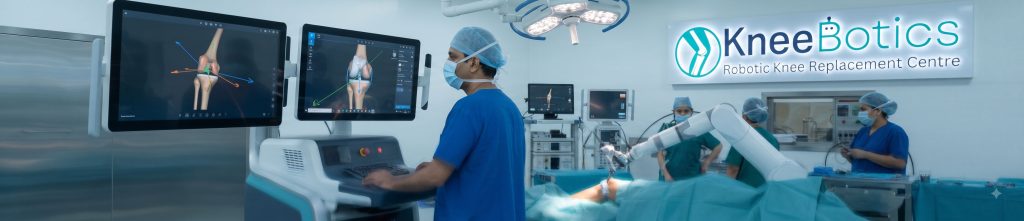
Joint pain can alter your lifestyle and impact your day-to-day activities. Joint replacements offer relief from chronic pain and restore your quality of life. People who have advanced knee osteoarthritis or knee joint damage do not get pain relief and functional improvement from conventional methods like medication, physical therapy and lifestyle changes. Joint replacement can be the last resort for such patients. There have been numerous advances in the field of orthopedics over the last decade. The last few years have seen a surge in the popularity of advanced computer-assisted surgeries. If you are exploring your options in Maharashtra’s financial capital, understanding the differences between robotic total knee replacement in Mumbai and robotic partial knee replacement in Mumbai can help you make an informed choice about your joint health. Why Choose Robotic-Assisted Surgery? A conventional total knee replacement surgery is a tried and tested method to treat end-stage knee osteoarthritis. However, each knee has unique anatomy comprising of varying shapes of the knee bones and ligaments, as well as unique patterns of wear. Conventional methods for knee replacements often rely on a surgeon’s experience, manual alignment and the use of mechanical instruments. The robotic system helps a surgeon align the knee in a more precise manner. Using advanced three-dimensional computer modeling and a special robotic arm, the surgeon can pre-plan the procedure. – Customized Alignment: Robotic systems create a three-dimensional, virtual model of your knee, and can then align the replacement based on that model. – Using advanced surgical technology, knee replacement surgery is performed to relieve pain and improve function in patients with advanced knee arthritis. A total knee replacement is done when multiple compartments (medial, lateral and patellofemoral) of the knee joint are severely arthritic. How it works During a robotic total knee replacement surgery, the surgeon uses a special platform to design the limits of bone removal. The surgeon remains in control of the operation and takes advantage of the robotic system’s precision to refine the surgery. The main benefits of performing total knee replacement with robotics are as follows: 1. Preservation of knee ligaments, 2. Minimized post-operative pain and 3. Faster recovery, allowing the patient to walk a couple hours after the surgery. 4. Potentially, a more natural-feeling knee, as it may last longer. Robotic Partial Knee Replacement in Mumbai Partial knee replacement is preferable in cases when a patient does not require a complete knee replacement. In such cases, generally, osteoarthritis is localized to the inner (medial) compartment of the knee. Why Choose Partial Replacement over Total? In partial knee replacement, only the damaged portion of the knee is removed and replaced with an artificial knee. This keeps the other parts of the knee, i.e. ligaments and other parts, intact. Key Benefits of Robotic Partial Knee Replacement Preservation of Natural Knee Kinematics: Because your natural ligaments are intact, your knee is capable of natural motion, i.e. similar to what you had before. Faster Recovery: As compared to total knee replacement, patients require less time to recover and are discharged earlier. Quick Recovery: As compared to total knee replacement, partial knee replacement patients are able to return to their regular lifestyles, including high impact activities (travel and sports) earlier. Total vs. Partial Knee Replacement: Which One Do You Need? Robertically assisted total knee replacement and partial knee replacement are surgical interventions. Choosing between the two is based on the extent of cartilage deterioration in your joints, the stability of your joints, and other anatomical factors. – Choose Partial Knee Replacement if the arthritic changes are confined to a single compartment, your ligaments are fully intact and your overall knee stability is normal. – Choose Total Knee Replacement if you have worn out multiple knee compartments and other component of the knee i.e. collateral ligaments, meniscal tissue, and joint capsule. Additional evaluations by specialists in robotic-assisted joint replacement and specialized imaging may be necessary to devise the optimal plan. Take the Next Step Toward Pain-Free Mobility Chronic knee pain is often caused by damaged or worn-out knee joints. The first step to eliminating your pain is receiving a proper diagnosis. Next, if you are a good candidate for a partial or total knee replacement, your surgeon will need to determine the exact size and shape of your joint in order to create a prosthesis that will function best for you. Thanks to robotic technology, surgeons are now able to create a precise treatment plan specific to each individual. If you or a loved one is considering a robotic total knee replacement or robotic partial knee replacement in Mumbai, make sure you consult a specialist who uses the latest, state-of-the-art systems to deliver predictable, high-precision results. NAP – Kneebotics Business Name: Kneebotics – Robotic Joint Replacement Center Address: Plot No. 3, S V Road, Punit Nagar, Borivali West, Mumbai, Maharashtra 400092 Phone: +91 93727 37914 Email: drkunalpatel@gmail.com The address and appointment details are listed on the official Kneebotics contact page. Follow Kneebotics on Social Media Facebook: https://www.facebook.com/KneeBotics Instagram: https://www.instagram.com/kneebotics/
Why Choose Robotic Knee Replacement? Insights from Mumbai’s Leading Surgeons
Persistent knee pain can dramatically change the way you live your life. Eventually activities such as walking, climbing stairs, getting up from a chair and standing for long periods can become difficult. While knee arthritis and severe joint damage may be treated with conservative methods such as medications, Physio therapy and lifestyle modifications, surgery may become inevitable. The field of orthopaedics has improved and so has the technology. Robotic surgery has improved knee care. Robotic knee replacement in Mumbai has orthopaedic surgeons who, along with their years of experience, plan surgeries using Robotic and computer technologies. This helps them improve accuracy during selected knee replacements. You may have many questions about robotic assistance. Is it better than conventional knee replacement? Is it right for you? Before making a final decision, there are a few things you should know. Things To Know Before Opting For Robotic Knee Replacement Robotic assistance does not mean a robot performs surgery. The surgeon is always in control. Robotic technology is a powerful tool to help perform surgeries. Based on the system in use, it may provide the surgeon with real time information during the surgery to help with aspects such as bone preparation and implant positioning. The overall goal is to keep the surgery as controlled and as personalized as possible. Before making your final decision, you should do your own research and find out what else is out there. The amount of arthritis, the shape of your bones, the condition of your ligaments, the alignment of your limbs and the overall health of your joints can vary a lot from person to person. As knee replacement surgery is increasingly being guided by robotic technology, surgeons can expect to have additional information when planning and performing surgery. Some benefits may include: 1. More Individualized Surgical Planning Knee replacement surgery, typically, relies on averages and standards, and may not always account for the individual variances that are present in each patient’s anatomy. Robotic technology aids in the creation of a more individualized treatment plan. This may allow surgeons to better assess the positioning and alignment of components during surgery. 2. More Accurate Bone Preparation In a similar manner, the technology may assist in the achievement of the planned cuts to the bone to better reflect the individual’s anatomy, especially if precise positioning is essential for a well-balanced knee. 3. More Accurate Implant Positioning The function of a knee replacement is dependant on the alignment and position of the implant. With this technology, the surgeon has the option of receiving more information to assist in reaching the desired position of the implant. 4. Preservation of Healthy Bone and Tissue In selected cases, the technology can aid in achieving a more controlled and individualized bone preparation. This is especially applicable in a partial knee replacement where healthy bone may be preserved. Support for More Individualized Approach A key difference with robotic-assisted knee surgery is that every surgical plan is customized based on the anatomy and joint condition of the patient. Because of this, robotic systems have transformed the way various joint replacements are performed. Total versus Partial Knee Replacement The other major factor to consider is whether a patient requires a total or partial knee replacement. Total Knee Replacement Total knee replacement is indicated if arthritis or other joint damage is present in more than one area of the knee joint. During surgery, damaged areas of the knee joint are replaced with an artificial joint. The knee joint is then lined with a plastic spacer. Using a robotic system can aid the surgeon in planning the surgery, prepping the bone and positioning the implants. Partial Knee Replacement Partial knee replacement may be considered when arthritis is present in only a single area of the knee joint and the other areas of the joint can be retained. The goal of the surgery is to replace only the damaged portion of the knee joint. The healthy bone and joint structures can be preserved. This may result in a smaller and less invasive surgery with potentially better and quicker rehabilitation. However, this may not always be the case and there are several factors that must be considered prior to surgery. Who May Be a Candidate for Robotic Knee Replacement? Robotic assistance may not always be the best choice for every patient. Your surgeon may consider it if you have: Advanced knee osteoarthritis Persistent knee pain that limits your daily activities Knee stiffness and/or limited range of motion Knee deformity and/or malalignment Joint damage that has not improved with non-surgical treatment A medical condition for which knee replacement is recommended For Robotic partial knee replacement in Mumbai, specific criteria are considered. Usually, arthritis needs to be confined to a specific knee compartment and the other structures and ligaments of the knee joint need to be normal and healthy enough to preserve. A thorough physical examination and appropriate diagnostic tests are done to determine the type of surgery to be performed. Is Robotic Knee Replacement Better Than Conventional Surgery? This is one of the most frequent questions that patients have. Better results do not always depend on the use of advanced technology in surgery. Success of knee replacement mainly depends on: The surgeon’s correct assessment of the problem The surgeon’s experience and skills Judgment in deciding about the right patient for the surgery Selection of appropriate implant Correct surgical technique General health of the patient Intensity of physiotherapy and rehabilitation Adherence to post-operative instructions For some patients, a traditional (conventional) knee replacement may be more appropriate. A good, experienced surgeon will make the decision based on the patient condition and not on the technology because of its recent advancement. What Can Patients Expect During Their Procedure? Although the exact process varies with different robotic platforms and types of replacement, the overall process generally consists of the following steps. Step 1: Detailed Evaluation During this step, the surgeon reviews the patients symptoms and history as well as performs a physical examination and reviews
What You Should Know About Robotic-Assisted Knee Replacement Surgery in Mumbai

Joint discomfort can make everyday tasks around the house and at work difficult. This can include simple tasks like going for a walk or a jog, going up the stairs, and even getting out of the chair. If conservative treatments of your knee joint do not work, you may need to consider a knee replacement surgery. Thankfully, innovations in technology can help patients even further. With robotic knee replacement surgery, a patient may benefit from the aid of a surgeon in combination with a robotic system. This type of surgery is a precision guided system that helps your doctor address the joint replacement surgery. If you are considering robotic knee replacement in Mumbai, understanding how the surgery works, prepping for the surgery, potential benefits of the surgery, and expected recovery time may help you formulate questions to ask your doctor. What Happens during Robotic-Assisted Knee Replacement Surgery? Robotic-assisted systems help a surgeon in surgery planning and provide a surgeon with information during the surgery. This system, however, does not perform the surgery. The surgeon is in complete control of the surgery at all times. For whom is Knee Replacement Surgery? Knee replacement surgery is performed when there is significant damage to the knee joint. This damage may be caused by a number of reasons including, but not limited to, a serious injury to the joint, rheumatoid arthritis, osteoarthritis, or other conditions which result in a significant loss of cartilage in the joint. A referring physician may request a surgical evaluation when conservative management is inadequate to alleviate a patient’s symptoms. The orthopedic surgeon will review the patient’s symptoms and the results of previous imaging, in addition to the patient’s history, physical exam, and overall functional status. The orthopedic surgeon may perform or order additional diagnostic studies. If therapy is prescribed, it may be physical therapy, occupational therapy,speech therapy or a combination. Medications may be prescribed or changed. Diet, fitness level and weight may be a factor in surgery as well as activity level. Surgery may be recommended to alter a deformity, gait, improve an impaired function or a malalignment. Other factors may be pain, weakness, instability, stiffness or a limitation in range of motion. The expected benefits of a surgical procedure need to outweigh the potential risks of a surgical procedure. Decision Making Before Robotic Knee Replacement A number of other factors need to be taken into account prior to scheduling a knee replacement surgery. During your appointment with the surgeon, find out why the surgeon thinks surgery is the best option for you. In addition, ask about potential risks, benefits and other options. Make a list of questions to bring with you to the appointment. It is important to also consider the expected duration of your recovery. The duration of your recovery will be largely dependent on the therapy you receive and your compliance with the therapy. It is important to choose a best robotic surgeon in Mumbai with the necessary expertise and experience with the type of procedure you are having. In addition, you should choose a hospital with a competent, caring staff. The hospital should have state of the art equipment and be well equipped to assist you following your surgery. Understanding Recovery Recovery times vary case by case following a knee replacement surgery. Generally speaking, it is encouraged for patients to begin rehabilitation and initiate movement post surgery. Physical therapy may help restore and build flexibility, balance, and strength of your knee joint. Following your surgeon’s post surgery recovery plan, attending your follow up appointments, completing your course of prescription, and slowly but surely increasing your movement and activity helps aid in the recovery process. Pushing your recovery too quickly can be a detriment to the process. Make sure you speak up to your healthcare team should you experience any unusual symptoms. Make an Informed Decision Robotic knee replacement is an advanced technology that can benefit some patients, but it is not always the best option. Each case is assessed on an individual basis. If you live in Mumbai and are considering this type of surgery, it is best to seek the opinion of an experienced orthopedic surgeon to learn about your options and evaluate the pros and cons of the surgery. The right surgeon will help you better understand what to expect and put your mind at ease regarding your surgery. NAP – Kneebotics Business Name: Kneebotics – Robotic Joint Replacement Center Address: Plot No. 3, S V Road, Punit Nagar, Borivali West, Mumbai, Maharashtra 400092 Phone: +91 93727 37914 Email: drkunalpatel@gmail.com The address and appointment details are listed on the official Kneebotics contact page. Follow Kneebotics on Social Media Facebook: https://www.facebook.com/KneeBotics Instagram: https://www.instagram.com/kneebotics/ If you are searching for the Best orthopedic doctor in tricity, then click here
Is Robotic Partial Knee Replacement in Mumbai the Right Choice for You?

Living with knee pain limits your mobility, whether it makes climbing stairs more tedious, forces you to shorten walks, or prevents you from sitting in your favorite positions. If your doctor has suggested “partial knee replacement” and you’ve resorted to searching if the robotic version is worth the investment, we’ve created this document to help you. Below, we’ve listed the most frequent questions that patients have when getting robotic partial knee replacement in Mumbai and have tried to provide the answers as clearly as possible. 1.What is partial knee replacement? The knee consists of three compartments. Osteoarthritis usually attacks one of the three, typically the inner compartment. For patients who only have that compartment affected, the inner compartment can be replaced in a partial or unicompartmental knee replacement. The remaining compartments can then be preserved in a partial knee replacement. Partial knee replacements are less invasive than total knee replacements and can therefore be done with fewer incisions. Q2. How is “robotic” partial knee replacement different from the traditional method? A: There are several differences between traditional and robotic-assisted partial knee replacements. Traditionally, the surgeon would use standard tools and rely mainly on their own eyesight and judgement to determine the correct positioning of the implant. In a robotic-assisted partial knee replacement, a robotic arm is used to assist the surgeon in such a way that the robotic arm is controlled by the surgeon to perform the task of positioning the implant by the arm with a precision of less than a millimeter. Throughout this process, the surgeon remains in complete control of the robotic arm as it does not act on its own. In this sense, the robotic system has the functionality of being an exact and highly precise pair of assisting hands, which essentially significantly reduces the margin of error of the process. At Kneebotics, Dr. Kunal Patel uses the VELYS Robotic-Assisted Solution, which uses imageless technology and does not need a pre-operative CT or MRI to plan the surgeries, making the process easier for the patient. Q3. Am I even a candidate for a partial knee replacement, robotic or otherwise? A: There are a few broad categories of patients who would be considered good candidates for partial knee replacement, robotic or otherwise. Good candidates would be patients who: – Have knee arthritis that is only present in one compartment of the joint as would be seen on X-ray, – Have a preserved anterior cruciate ligament with good knee alignment, – Are of normal weight with consideration for each case, – Have not received significant benefits from medications, etc., and have also failed to receive significant benefits from physiotherapy and knee injection therapy, It should be noted that partial knee replacement is not the best option for patients who have multi-compartment arthritis. In this case, a total knee replacement would be the better option. This is why an X-Ray and clinical evaluation in person are largely preferred over any partial knee replacement candidate checklists that are done on the internet. Q4. What are the real benefits of choosing the robotic method? A: The benefits commonly mentioned include: – Implant positioning/alignment is more precise since the plan accommodates your knee. – Less soft-tissue damage because only the affected compartment is worked on. – Faster recovery and mobilization compared to other invasive methods. – A more functional knee because your ligaments and healthy bone are retained. – Imageless planning because there is no extra CT/MRI scan before the operation. Q5. Does robotic mean automated surgery? Is it safe? A: This is one of the most prevalent myths, and the answer is no. The robotic arm does not make commands or act on its own. The robotic arm follows the surgeon’s commands to a plan that the surgeon lays out. Think of it as a very advanced tool used to assist the surgeon in performing a precise task. Q6. What is the recovery time and how long before I walk normally? A: Exact timeframes depend on the person, but because a partial knee replacement is much less invasive than a total knee replacement, many patients are up and walking with assistance within a day of surgery, and most can walk normally within weeks. Long walks and other lifestyle modifications will also depend on other factors, including the advice of your surgeon and progress during physiotherapy, as recovery will not be based on a general recovery timeline. Q7. What criteria should I use to find the best possible surgeon for this procedure in Mumbai? A: Look for these criteria in a potential surgeon: – Robotic-assisted knee training and experience in addition to traditional knee replacement training and experience – Honest assessments of candidacy for partial vs. total knee replacement. A good surgeon will offer the best option for your knee and won’t offer the newer, more expensive option if it’s not appropriate for your situation. – Openness about costs, the hospitals he or she works with, and the support during rehab after the operation – Verifiable history with patients and good reviews and ratings Dr. Kunal Patel is a Consultant Orthopedic Surgeon and robotic surgery in Mumbai. He trained at TNMC Mumbai and utilizes the VELYS Robotic-Assisted Solution and ATTUNE Knee System, and has affiliations with numerous surgical centers in the city. Q8. Is robotic partial knee replacement more costly than the traditional surgery? A: The procedure being robotic-assisted adds some cost for the technology, however the difference is case, implant, and hospital specific. The good news is that in India, there is some regulation in place for joint replacement surgery costs. The best and most informative option to get an estimate for costs would be to book a consultation with the surgeon. Q9. Is it worth it? A: Robotic partial knee replacement is a great option to consider if you have localized knee arthritis, want to keep the majority of your knee joint, and prefer a highly individualized surgical plan over a generic plan. However, what is “right for me”
Robotic Knee Replacement Surgery in Mumbai: Faster Recovery with Advanced Technology

Any sort of injury or damage to any joint or limb can affect one’s quality of life. Knee pain, specifically, can be debilitating due to osteoarthritis and other forms of age degradation. Thankfully, new forms of orthopedic care have made it possible for patients to receive more cutting edge forms of orthoplasty. Robotic Knee Replacement Surgery in Mumbai is faster, more efficient, and more precise within the range of treatments than traditional techniques. Dr. Kunal Patel employs the use of robotic technology in his practice in providing patients with not only Dr. Kunal Patel the opportunity to lead a functional and active life again, but to improve their overall joint mobility as well. Robotic Knee Replacement Surgery Like many of the new advanced methods of surgery, robotic knee replacement surgery takes the combination of an orthopedic surgeon’s training robotic knee replacement surgery and skill and assists it with the aid of a robotic system. One of the many benefits of this system is the ability for the surgeon to complete a customized surgical plan with the assistance of the robot to give in-situ feedback while operating. One of the many rumors surrounding surgery of this nature is the fear that the robot will be autonomous of the surgeon. This couldn’t be more false, as robotic technology is incorporated in surgery to aid a surgeon’s precision, the control will always remain of the surgeon’s. Robotic Technology is Changing the Game for Knee Replacement Surgery Precision Robotic assisted surgery is one of the few forms of precision surgery. The technology ensures that the placement and cuts made to any bone or joint is mapped to the anatomy of the specific patient. Unlike any other form of surgery, this technology is revolutionary in that it ensures a natural feeling to the joint post-surgery. Personalized Treatment Planning All knees are unique. With the help of robotic technology, surgeons can plan surgical procedures on a patient-by-patient basis, enhancing overall balance and alignment. Better Implant Positioning Robotic technology offers the best chance of getting the implant positioned in the perfect place every time and greatly improves the long-term stability of the joint, while also minimizing the risk of the implant wearing out and other complications. Preservation of Healthy Tissue Robotics helps minimize tissue trauma and, coupled with the other advantages of robotic technology, makes the process of patient rehabilitation and recovery quicker and easier. Benefits of Robotic Knee Replacement Surgery Robotic knee replacement surgery offers a multitude of benefits. Some of these include: – Higher precision of surgery – Improved alignment of joints – Less blood loss during surgery – Less discomfort – Enhanced rehabilitation – Quicker return to normal daily routine – Increased satisfaction of the patient – Better longevity of the implant Because of these benefits, many patients prefer robotic knee replacement surgery over other orthopedic alternatives. Faster Recovery with Robotic Knee Replacement Robotic knee replacement surgery focuses on preserving as much healthy tissue as possible. This is one of the most important reasons patients feel like recovery takes so much less time. Patients experience the following benefits: Reduced Pain and Swelling Because there is so much less disruption to the surrounding tissue, patients feel much less inflammation and post-operative pain. Early Mobility Patients often feel encouraged to walk with the help of others very soon after surgery. This greatly enhances rehabilitation. Shorter Hospital Stay Patients can expect to spend less time in the hospital after surgery because of better surgical precision and recovery protocols. Faster Return to Normal Activities With the right rehabilitation and physiotherapy, you can expect to regain mobility and return to your normal activities in less time than you would be able to after traditional surgery. Who Is a Candidate for Robotic Knee Replacement? You may be a candidate for this procedure if you have: – Severe arthritis in the knee – Chronic knee pain that interferes with your normal routines – Hard time walking, standing or going up and down the stairs – Stiff and less flexible knee joints – Little to no improvement with physical therapy or medication – Drastically reduced mobility An orthopedic assessment will help determine if you are a candidate for robotic knee replacement. Why Choose Kneebotics for Robotic Knee Replacement in Mumbai? Kneebotics specializes in robotic-assisted knee replacement with a patient-centered focus. With the expertise of Dr. Kunal Patel, patients receive: – the most modern robotic surgical systems – customized surgical plans – thorough pre-surgical evaluations – contemporary surgical methods – detailed post-surgical rehabilitation plans – emphasis on recovery and mobility Patients can expect improved outcomes and greater quality of life with the combination of modern technology and experienced surgical care. Preparing for Robotic Knee Replacement Surgery Prior to surgery, many patients have: – Medical history and physical exam – Imaging – Blood work and medical screening – Medication evaluation – Counseling Taking the extra time to prepare helps make the surgery and recovery easier. Life After Robotic Knee Replacement Rehabilitation after surgery is the most important factor in determining how successful the surgery is. The goals of physiotherapy may be to: – Increase the range of motion in the knee – Build muscle strength – Enhance coordination and balance – Improve functional mobility – Maintain healthy joint function After rehab, many patients report less pain and greater mobility for many years. Conclusion Knee replacement surgery has improved dramatically and now offers greater accuracy in knee surgery, faster recoveries, and more individualized patient care. Patients with chronic knee pain and restricted mobility are excellent candidates for robotic surgery in Mumbai to gain a greater quality of life and to enhance daily functioning. At Kneebotics, Dr. Kunal Patel integrates modern technology with orthopedic expertise to personalize advanced knee replacement surgery for every patient. Frequently Asked Questions (FAQs) 1.What is robotic knee replacement surgery? Robotic knee replacement surgery is the first step in a highly advanced knee replacement surgery that integrates robotic technology to assist the surgeon. 2.How is robotic knee replacement surgery different
